 ultimate-guide
Roof Maintenance for Property Managers: 2026 Guide
Table of Contents
- Why Roof Maintenance Is a Core Property Management Responsibility
- Commercial Roof Maintenance Checklist: What to Inspect Every Season
- Preventative Roof Maintenance Schedule for Property Managers
- How to Document Roof Inspections for Compliance and Claims
- Roof Maintenance Contract for Property Managers: What to Require
- Budgeting, CapEx Planning, and Sustainability for Roof Longevity
- Conclusion
Last Updated: August 26, 2026
Why Roof Maintenance Is a Core Property Management Responsibility
For property managers in Indianapolis and surrounding communities, roof maintenance is a central part of protecting a commercial or multifamily building. A neglected roof can compromise the building envelope, allow moisture into walls and mechanical systems, disrupt tenants, and turn preventable problems into expensive repairs.
At Roof Masters And Exteriors, we help commercial and multifamily property owners identify roof problems before they become an emergency repair, and emergency repairs cost significantly more than scheduled preventative work.
The concept of roof maintenance as a core responsibility connects directly to asset management. A commercial roof represents a major capital investment, and its condition directly affects property value, tenant retention, energy efficiency, and insurance standing. Inspection records may also help document pre-loss condition during a storm-damage claim, subject to the policy terms and the insurer's review. Property managers should follow their carrier's documentation requirements and keep dated inspection and repair records.
Preventative maintenance vs. reactive repairs is the central tension in every roof management strategy. Reactive repairs address visible failures after they occur. Preventative maintenance intercepts those failures before they happen. The financial case for prevention is straightforward: catching a flashing failure or a membrane blister early costs a fraction of what a full leak remediation and interior water damage repair will run.
According to the National Roofing Contractors Association guidance on commercial roof maintenance, roof system maintenance is one of the most important factors, after proper installation, in determining roof service life and cost. A structured inspection and maintenance program helps owners put that guidance into practice.
Commercial Roof Maintenance Checklist: What to Inspect Every Season
Seasonal inspections are the foundation of any sound roof maintenance program. The goal is to assess the building envelope systematically before weather conditions create new stress and after they have already applied it.
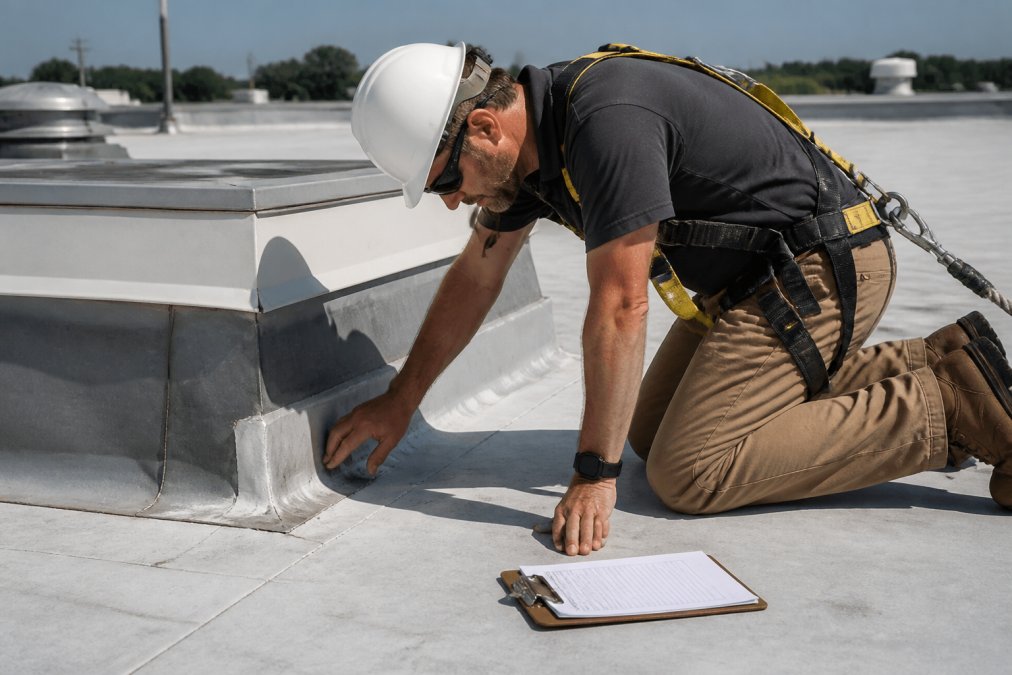
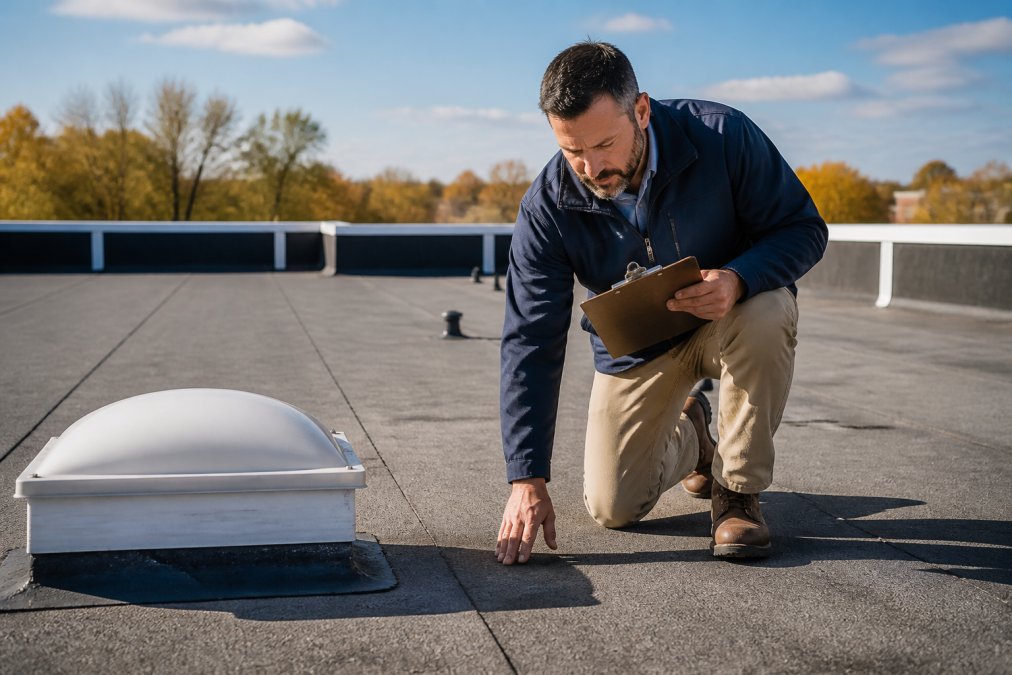
A structured commercial roof maintenance checklist should cover three distinct areas: the roof surface itself, drainage systems, and all penetrations and transitions. Missing any one of these creates a blind spot that routine inspections are designed to eliminate.
Roof Surface, Membrane, and Shingle Condition
The roof membrane or shingle field is the primary water barrier, and its condition determines everything downstream. Inspectors should look for:
- Blistering, bubbling, or delamination on single-ply membranes
- Cracks, splits, or granule loss on shingle surfaces
- Ponding water that remains more than 48 hours after rainfall
- UV degradation or surface brittleness on aged roof coatings
- Visible punctures or tears near equipment mounts and foot traffic paths
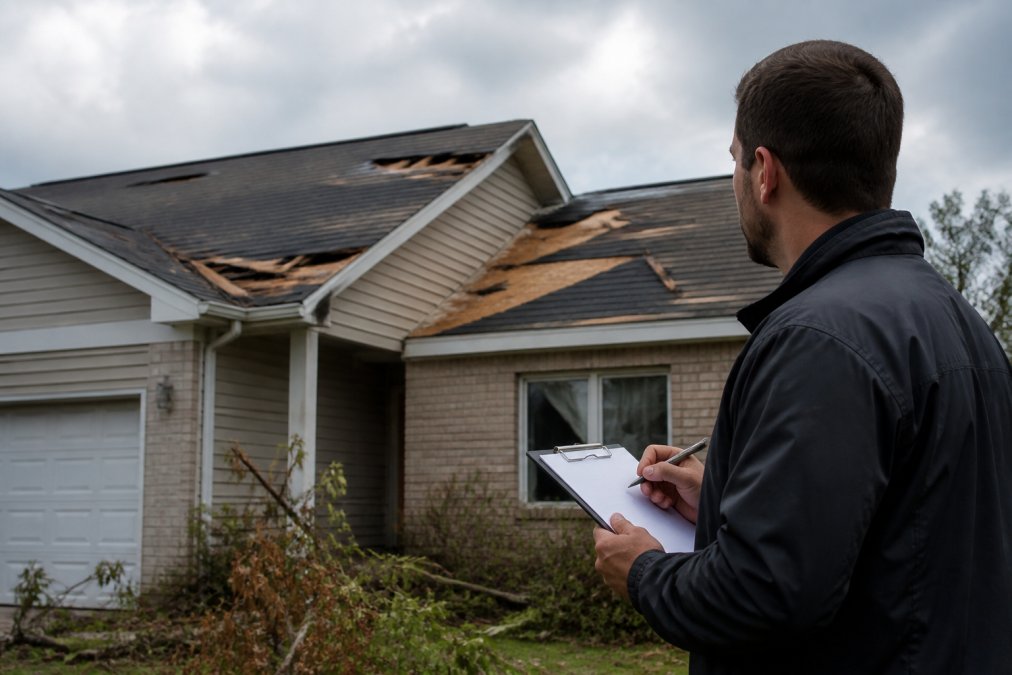
Shingle condition on sloped sections of commercial or multifamily roofs deserves the same scrutiny as flat membrane systems. Storm damage often appears as missing shingles, lifted edges, or cracked tabs that are easy to miss from ground level but become active leak points within one rain cycle.
Structural integrity concerns, sagging deck sections, soft spots underfoot, or visible deflection, require immediate escalation. These are not cosmetic issues.
Gutters, Drainage Systems, and Debris Removal
Drainage systems fail quietly. A clogged interior drain or a gutter packed with debris does not announce itself until water begins backing up under the membrane or overflowing into the fascia.
Gutter maintenance should occur at minimum twice per year, with additional checks after major storms. Inspectors should verify:
- Gutters and downspouts are clear of leaves, sediment, and biological growth
- Drain covers and strainers are intact and unobstructed
- Scuppers are free of debris and draining to grade
- Slope toward drains is maintained and has not shifted due to settling
Debris removal from the roof surface itself matters beyond aesthetics. Organic material holds moisture against the membrane, accelerating deterioration and creating conditions for biological growth that can compromise the roof surface over time.
Flashing, Seals, and HVAC Penetrations
Flashing and penetration seals are where most commercial roof leaks originate. Every point where the roof surface transitions, at parapet walls, curbs, skylights, vents, and HVAC equipment, is a potential failure point.
HVAC penetrations deserve specific attention. Units shift slightly over years of thermal cycling and vibration, and the seals around curb flashings can crack or separate without any visible surface damage. Inspectors should check:
- Counterflashing and base flashing for separation or corrosion
- Pipe boot seals for cracking or shrinkage
- HVAC curb flashings for gaps, lifted edges, or standing water
- Caulking at all transitions for shrinkage, cracking, or adhesion failure
A watertight seal at every penetration is non-negotiable. One failed pipe boot can introduce enough moisture to damage insulation, decking, and interior finishes before the leak becomes visible from below.
Preventative Roof Maintenance Schedule for Property Managers
A preventative roof maintenance schedule for property managers should operate on three time horizons: seasonal, annual, and multi-year. Each serves a different purpose in the overall risk mitigation strategy.
Flat Roof Maintenance Guide for Property Managers: Protect Your Investment & Stay Compliant
Seasonal (every 3 months):
- Visual inspection of roof surface, gutters, and drainage
- Debris removal after storms or high-wind events
- Check for new HVAC equipment installations that may have compromised the membrane
- Document any changes in surface condition with photographs
Professional inspections (at least twice per year, ideally spring and fall):
- Full inspection by a qualified roofing contractor
- Infrared or moisture scan to detect subsurface wet insulation
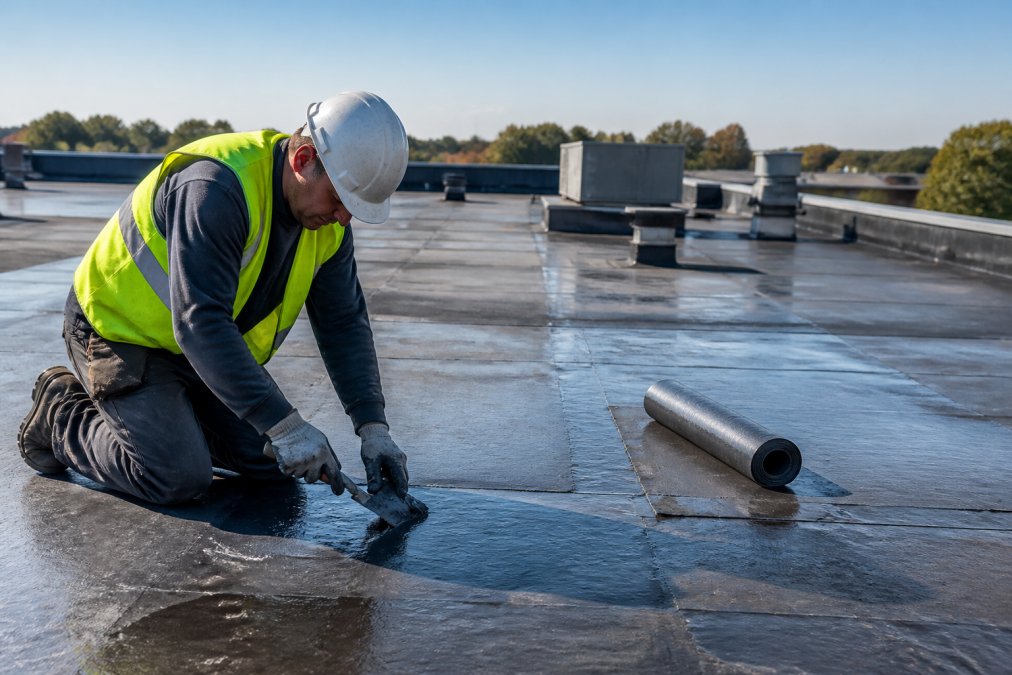
- Resealing of all penetrations and transitions showing early wear
- Roof coating assessment and reapplication schedule review
- Update the roof assessment report and maintenance log
Multi-year (every 3-5 years):
- Core sample testing to evaluate insulation condition
- Full review of roof warranty status and any actions required to maintain coverage
- Capital expenditure planning update based on observed degradation rate
- Evaluation of roof coating systems to extend roof service life before full replacement
The most common mistake property managers make is treating professional inspections as the only maintenance touchpoint. Seasonal walkthroughs, even informal ones by trained facility staff, catch the debris accumulation, storm damage, and drainage issues that develop between formal inspections. According to the Building Owners and Managers Association International maintenance resources, BOMA's current maintenance guidance emphasizes predictive maintenance and practical checklists to reduce system failures, improve building performance, and support long-term asset sustainability.
How to Document Roof Inspections for Compliance and Claims
Documenting roof inspections is as important as conducting them. Without a clear, timestamped record of roof condition, property managers lose negotiating power with insurers, face difficulty demonstrating due diligence in liability situations, and have no baseline for tracking deterioration over time.
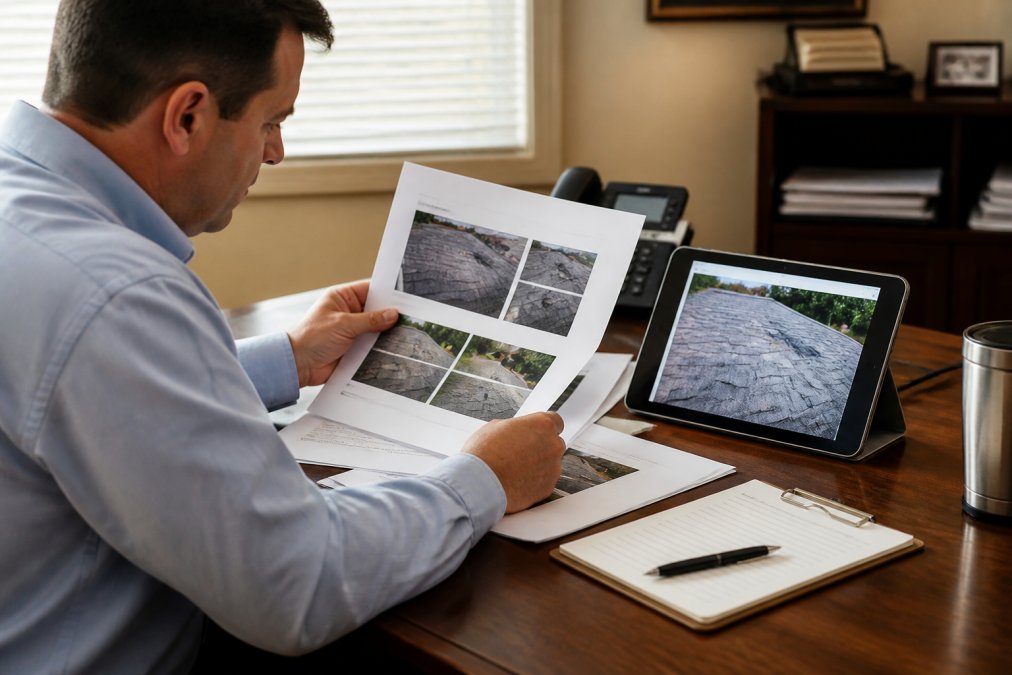
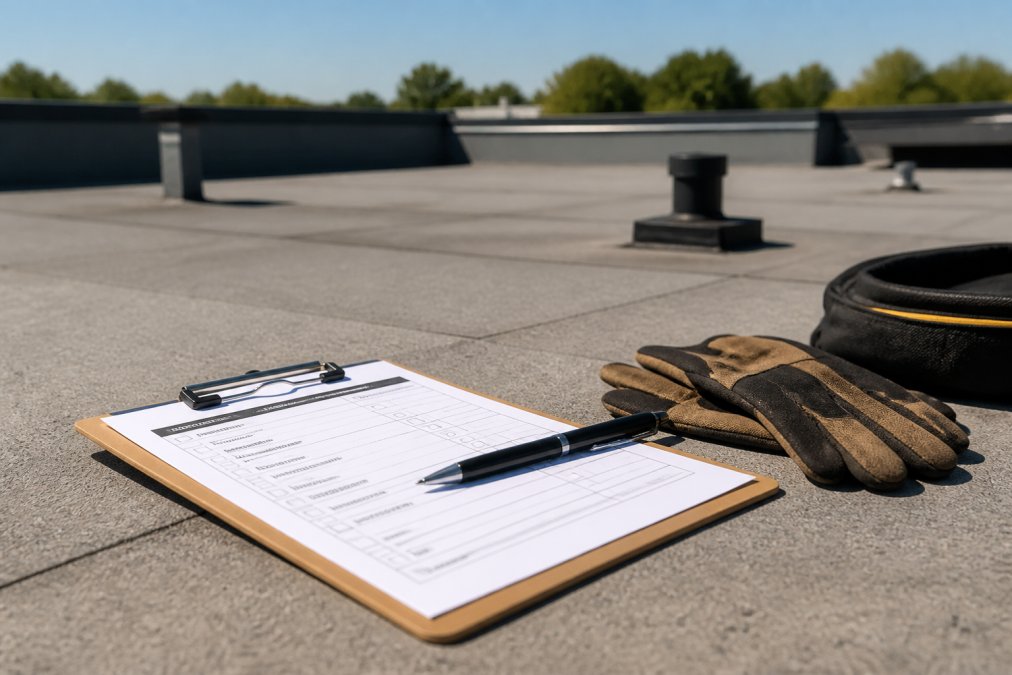
A compliant inspection record should include:
- Date, time, and inspector name, for every inspection, formal or informal
- Photographic evidence, geo-tagged photos of each area inspected, including close-ups of any defects
- Condition ratings, a consistent scoring system for surface condition, drainage, flashing, and penetrations
- Deficiencies noted, specific description of each issue with location on a roof diagram
- Actions taken or recommended, whether the deficiency was repaired immediately, scheduled for follow-up, or escalated
- Contractor sign-off, for any formal inspection, the contractor's name, license number, and signature
This documentation serves multiple functions. For insurance claims after storm damage, it establishes pre-loss condition and demonstrates that the property was maintained to a reasonable standard. For warranty claims, it shows compliance with manufacturer-required maintenance intervals. For liability purposes, it demonstrates that the property manager exercised reasonable care in maintaining the building envelope.
Many property managers now use digital platforms to maintain inspection records, which allows for searchable history, automatic reminders, and cloud-based storage that survives local hardware failures. Whatever system you use, the records should be retained for the life of the roof plus several years.
Roof Maintenance Contract for Property Managers: What to Require
A roof maintenance contract for property managers is the operational mechanism that converts a maintenance strategy into consistent, accountable execution. Without a formal contract, you are relying on informal arrangements that have no enforcement mechanism when service quality slips.
Here is what a well-structured maintenance contract should specify:
Contract Element | What to Require |
|---|---|
Inspection frequency | Minimum semi-annual, with post-storm response |
Response time for emergency repair | 24-48 hour SLA for active leaks |
Scope of included services | Debris removal, drain clearing, minor seal repairs |
Documentation deliverables | Written report with photos within 5 business days |
Contractor qualifications | Licensed, insured, manufacturer-certified where applicable |
Warranty protection | Confirmation that maintenance meets warranty requirements |
Escalation process | Clear path from identified deficiency to repair authorization |
Vendor management is where many property managers lose value. A contract that specifies inspection frequency but not documentation deliverables leaves you with service that cannot be verified. A contract that includes emergency response language but no defined SLA gives you no recourse when a contractor takes four days to respond to an active leak.
Negotiate response expectations explicitly. For active leaks or significant storm damage, define the response time the property requires and confirm the contractor can meet it. For routine inspections and non-urgent repairs, agree on scheduling windows in advance.
Roof Masters And Exteriors helps property owners establish dependable roof inspection and repair plans. A long-term contractor relationship can improve documentation continuity, inspection consistency, and familiarity with each property's roof systems and repair history.
Budgeting, CapEx Planning, and Sustainability for Roof Longevity
Most roof failures are not sudden events, they are the predictable endpoint of a deterioration curve that was visible years earlier. Capital expenditure planning for commercial roofing means reading that curve accurately and funding interventions at the right points.
A useful framework for CapEx planning divides roof expenditures into three categories:
- Operational maintenance budget: Annual costs for inspections, cleaning, minor repairs, and sealant work. These are recurring operating expenses, not capital items.
- Planned capital repairs: Mid-life interventions such as roof coating application, flashing replacement, or partial membrane repair that extend roof service life without full replacement.
- Replacement reserve: Funds accumulated over the roof's expected service life to cover eventual full replacement when the roof reaches end of life.
The practical implication is that a property manager who funds only the operational maintenance budget is systematically underfunding the asset. Planned capital repairs, particularly roof coating systems applied at the right point in the lifecycle, can extend a commercial roof's service life by many years, deferring the much larger replacement cost.
Sustainability and energy efficiency intersect with roofing in ways that directly affect operating costs. Reflective roof coatings reduce heat absorption, lowering cooling loads in summer months. Improved insulation reduces thermal transfer year-round. According to the U.S. Department of Energy's guidance on cool roofs and building energy efficiency, cool roofs can lower cooling demand in appropriate climates, but DOE notes they may increase winter heating energy use in colder climates. Indianapolis property managers should evaluate roof reflectivity, insulation, building use, and lifecycle cost with qualified professionals before choosing a system.
For multifamily property managers, energy efficiency improvements to the roof assembly can also support utility allowance adjustments and contribute to green building certifications that affect financing terms and tenant appeal.
The other angle most CapEx planning ignores is roof warranty management. Many commercial roof warranties require documented maintenance at specified intervals to remain valid. A property manager who skips required inspections may find that a warranty claim is denied because the maintenance record does not meet the manufacturer's terms. Always review the specific warranty and follow its inspection and maintenance requirements. As noted in NRCA's guidance on commercial roof warranty requirements, warranty compliance is a documented process, not an assumption.
Deferred maintenance is the most expensive form of roof management. Cutting preventative maintenance can lead to larger reactive repair costs, especially when moisture infiltration reaches insulation, decking, interior finishes, or structural components.
Proactive roof maintenance helps property managers identify defects sooner, plan repairs, and keep a clearer record of roof condition. Consistent inspections, documentation, and timely repairs can protect the building and support better capital planning. Serving Indianapolis and surrounding communities, Roof Masters And Exteriors brings over 35 years of experience, transparent communication, and hands-on roofing experience for commercial and multifamily properties. Contact us today to discuss a maintenance plan that protects your properties and supports your capital planning.
Frequently Asked Questions
How often should property managers schedule professional roof inspections?
Most roofing professionals recommend at minimum two formal inspections per year: one in spring after winter weather stress, and one in fall before temperatures drop. Properties in storm-prone areas, buildings with aging membranes, or multifamily assets with high liability exposure benefit from quarterly walkthroughs. After any severe weather event, a prompt post-storm assessment is essential regardless of your regular schedule. Consistent inspections catch moisture infiltration and flashing failures early, when repairs are far less costly than emergency work.
When should property managers check local roofing permit and code requirements?
Permit and code requirements vary by property type, project scope, and jurisdiction. Before approving a major roof repair, recover, or replacement in Indianapolis or a surrounding community, confirm the current requirements with the local building department and qualified project professionals. Avoid relying on a percentage rule that may come from another state or an outdated code.
What are the most common signs of roof failure property managers should look for?
The clearest warning signs include interior water stains on ceilings, visible cracks or splits in the roof membrane, blistering or bubbling on flat roof surfaces, granule loss in gutters from aging shingles, and standing water that does not drain within 48 hours. Deteriorating flashing around HVAC penetrations and skylights is another frequent source of leaks. Regular roof inspections help catch these issues before they escalate into structural damage or tenant complaints that create property liability exposure.
What documentation should property managers keep for roof repairs and inspections?
Maintain a file for each property that includes dated inspection reports with photos, contractor estimates and invoices, warranty documents, and repair records. After storm damage, photograph conditions before repairs begin when it is safe to do so. Clear records can help contractors, property owners, and insurers evaluate the roof history, subject to the policy terms and the insurer's review.
What is included in a roof maintenance contract for property managers?
A well-structured roof maintenance contract should define the inspection frequency, specific tasks covered (gutter cleaning, debris removal, flashing checks, drain clearing), response time guarantees for emergency repairs, and clear exclusions. It should also specify who carries liability insurance, how storm damage assessments are handled, and the process for escalating a repair to a full replacement recommendation. For portfolios with multiple properties, contracts that include SLA terms and reporting requirements give property managers consistent documentation and accountability from their roofing vendor.
How does preventative roof maintenance extend roof service life?
Small issues such as a failing seal around an HVAC unit or a blocked drain can become larger problems when left through freeze-thaw cycles or heavy rain. A consistent preventative maintenance schedule helps keep drainage, flashing, penetrations, and the roof surface in serviceable condition. Follow the roof manufacturer's inspection and maintenance requirements, because warranty terms vary by system and manufacturer.
This article was written using GrandRanker