Roof Masters And Exteriors
← All articles Commercial Flat Roof Repair Services: A 2026 Guide ultimate-guide

Commercial Flat Roof Repair Services: A 2026 Guide

Table of Contents

Last Updated: September 1, 2026

What Commercial Flat Roof Repair Services Include

Commercial flat roof repair services address everything from minor leaks to major structural damage on low-slope roofing systems. These services typically encompass leak detection, membrane patching, seam welding, flashing repairs, drainage system restoration, and full tear-off replacements when needed.

At Roof Masters And Exteriors, we understand that commercial flat roof repair isn't one-size-fits-all. A small puncture in an EPDM membrane requires different expertise than addressing widespread ponding water or storm damage. Our team has spent over 35 years diagnosing and fixing flat roof problems across Indianapolis and Central Indiana.

Most commercial flat roof repair services include:

  • Leak detection and source identification using visual inspection and thermal imaging
  • Membrane repair for rubber roofing systems like EPDM and TPO, including patching and re-welding seams
  • Flashing and penetration sealing around vents, skylights, HVAC units, and roof edges
  • Drainage system cleaning and repair to prevent ponding water
  • Coating application for restoration and extended roof life
  • Emergency tarping and temporary protection following storm damage
  • Documentation for insurance claims and warranty compliance

The best commercial flat roof repair services identify what caused the damage and address the underlying issue so problems don't recur.

Signs of Commercial Roof Water Damage

Water damage on a commercial flat roof often starts invisibly. By the time you notice interior staining or soft spots, the membrane has already been compromised for weeks or months. Catching damage early prevents costly water intrusion into walls, insulation, and structural components.

Close-up of water stains and discoloration on a commercial building's interior ceiling, showing visible moisture damage, peeling paint, and water rings on drywall under fluorescent office lighting

The most common signs of commercial roof water damage include:

  • Interior ceiling stains or water rings that expand over time
  • Soft or spongy spots on the roof membrane, suggesting water saturation in insulation
  • Visible blistering or bubbling on the membrane surface from trapped moisture
  • Seam separation where heat-welded seams are pulling apart
  • Ponding water that pools on the roof after rain and doesn't drain within 48 hours
  • Rust stains running down exterior walls from corroded flashing
  • Musty odors inside the building, often the first sign of hidden mold
  • Sagging roof sections indicating structural damage from water weight

A small breach in the membrane can saturate 100 square feet of insulation before becoming visible as an interior stain. If you notice any of these signs, contact a qualified contractor immediately. Water damage accelerates exponentially once it starts.

Common Types of Commercial Roofing Systems

Understanding your roof's material type is essential because repair methods, costs, and longevity vary significantly. Most commercial flat roofs fall into one of four categories.

TPO and EPDM Roofing

TPO (thermoplastic polyolefin) and EPDM (ethylene propylene diene monomer) are the most common rubber roofing systems on commercial buildings. TPO is heat-welded at seams, while EPDM is typically adhered with tape or contact cement.

TPO dominates newer installations because it's more reflective, reducing cooling costs, and seams are easier to repair. EPDM performs well in extreme temperature swings, making it popular in older buildings. Both systems typically last 15-20 years with proper maintenance (peer-reviewed research). TPO seams are more durable than EPDM tape seams, which can degrade from UV exposure.

PVC and Built-Up Roofing

PVC (polyvinyl chloride) roofing is chemically welded at seams, creating extremely strong, waterproof joints. It's more expensive than TPO or EPDM but offers superior durability in harsh environments.

Built-up roofing (BUR), also called tar and gravel roofing, consists of multiple layers of asphalt and felt topped with gravel. While less common on new construction, many older commercial buildings still have it. BUR repairs are labor-intensive because patching requires heating and re-laying asphalt layers.

PVC roofs typically last 20-30 years, while built-up roofing lasts 15-20 years (peer-reviewed research). Both systems are more expensive to repair than TPO or EPDM, but PVC's superior seam strength makes it cost-effective over the roof's lifetime.

Understanding the Cost of Commercial Roof Repair Per Square Foot

Pricing for commercial flat roof repair varies dramatically based on material type, damage extent, accessibility, and local labor costs. Repair costs depend on the roofing material (TPO and EPDM repairs are typically less expensive than PVC or built-up), the size of the damaged area, whether the repair involves seam work, and roof accessibility. Emergency repairs carry premium pricing.

Roof Masters And Exteriors provides free inspections and detailed estimates so you understand exactly what's needed and what it costs. The real cost question isn't the price per square foot, it's the total cost of ownership. A cheap repair that fails in a year costs far more than a quality repair that lasts five years.

Commercial Flat Roof Maintenance Contracts

Maintenance contracts are the difference between managing your roof's lifespan and being surprised by emergency repairs. A structured maintenance program catches problems early, extends roof life by 5-10 years, and often qualifies you for warranty compliance (peer-reviewed research).

Typical commercial flat roof maintenance contracts include:

  • Scheduled inspections (usually twice yearly, in spring and fall)
  • Cleaning and debris removal from the roof surface, gutters, and drainage systems
  • Seam inspection and re-welding for TPO and PVC systems, or tape re-sealing for EPDM
  • Flashing and penetration checks around vents, skylights, and HVAC equipment
  • Drainage system clearing to prevent ponding water
  • Documentation for warranty compliance and insurance purposes
  • Priority emergency response when problems occur

The cost of a maintenance contract is typically 1-3% of your building's annual operating budget, but it prevents emergency repairs that cost 5-10 times more. Most maintenance contracts run 1-3 years and include a defined number of site visits. Newer roofs may need annual inspections, while older roofs benefit from semi-annual visits.

Contact us today →

Repair vs. Replacement: Making the Right Choice

The decision to repair or replace your commercial flat roof is often the most expensive choice you'll make as a facility manager.

Repair makes sense if your roof is under 15 years old, damage is localized to less than 20% of the surface, and the underlying structure is sound. Replacement becomes necessary when your roof exceeds 20 years of age, damage covers more than 30% of the surface, multiple leaks recur despite repairs, or the membrane has lost structural integrity.

The key metric is the cost-benefit ratio. If repairs cost more than 50% of replacement, replacement usually makes financial sense. If repairs cost less than 30% of replacement and your roof has 5+ years of remaining life, repairs are typically the better choice.

Local Indianapolis building codes may also influence your decision. A qualified contractor can advise whether your situation triggers code compliance issues. Roof Masters And Exteriors provides honest assessments and won't recommend replacement when repairs make sense, or push repairs that delay inevitable replacement.

Emergency Leak Repair and Storm Damage Response

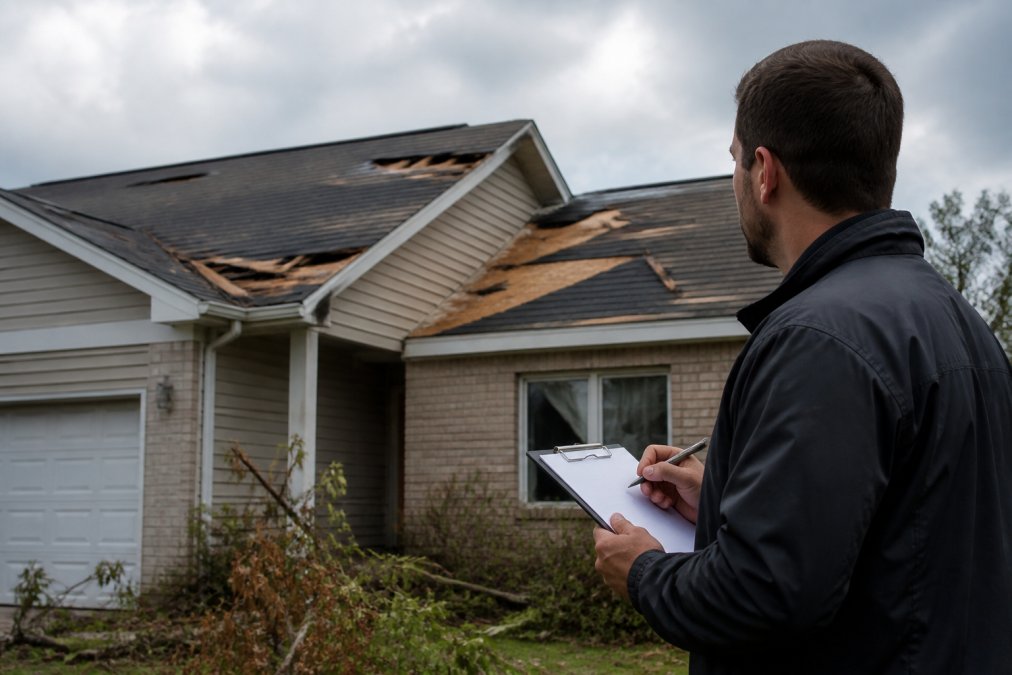
Storm damage to commercial flat roofs can be catastrophic. Wind, hail, and falling debris tear membranes, separate seams, and damage flashing within minutes. The longer you wait to address storm damage, the more water intrusion spreads through your building's insulation and structure.

Roofing crew members in safety harnesses using tarps and temporary repairs to cover and secure a damaged flat roof section after severe storm damage, with visible hail impact marks and torn membrane

Emergency leak repair requires immediate action. The first step is temporary protection, tarping damaged areas and redirecting water flow to prevent interior damage.

Permanent storm damage repair involves:

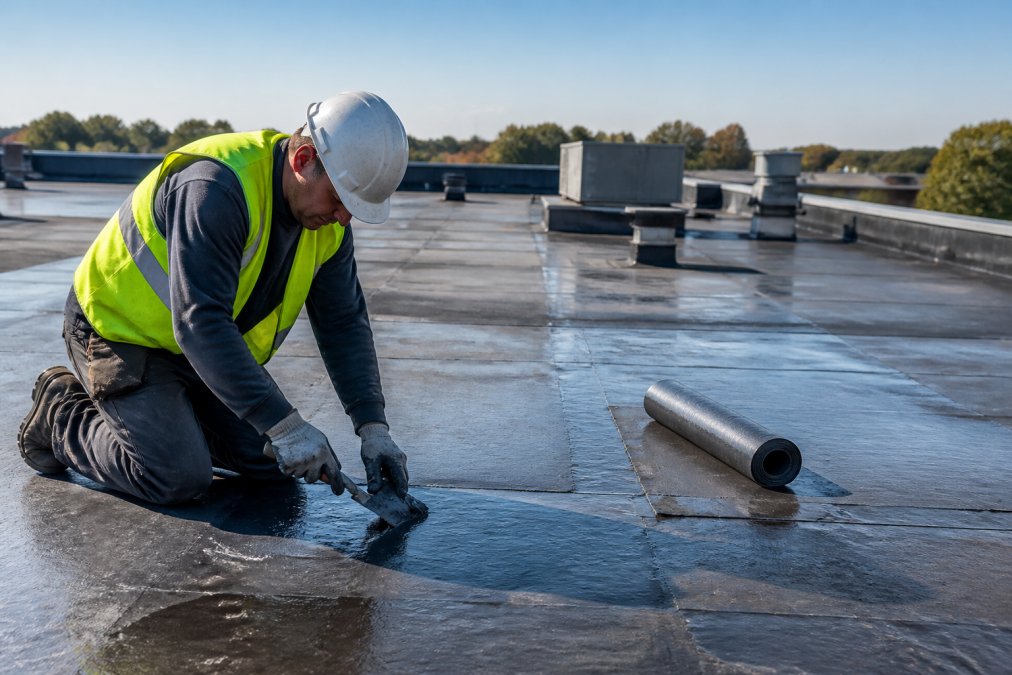
  • Replacing torn or punctured membrane sections with new material matching your existing roof system
  • Re-welding or re-sealing seams that separated during the storm
  • Replacing damaged flashing around penetrations and edges
  • Repairing or replacing insulation if water saturation occurred
  • Addressing structural damage to decking or framing if severe

Storm damage also triggers insurance claims. Contractors who understand insurance documentation can help expedite claims processing. Roof Masters And Exteriors provides 24/7 emergency response for storm damage across Indianapolis and Central Indiana.

What to Expect During a Roof Inspection

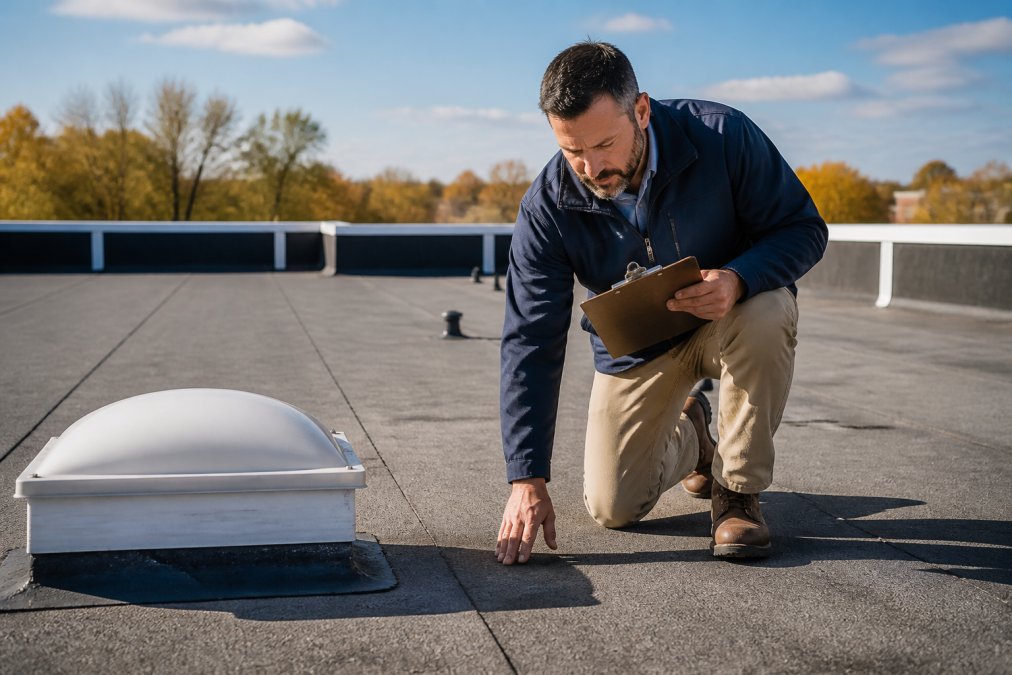
A professional roof inspection is your best defense against costly surprises. A thorough inspection identifies problems before they become emergencies and documents your roof's condition for warranty and insurance purposes.

During a comprehensive commercial flat roof inspection, the contractor should:

  • Walk the entire roof surface to visually inspect the membrane for damage and deterioration
  • Check all seams for separation, gaps, or deterioration
  • Inspect flashing around vents, skylights, HVAC units, and roof edges
  • Evaluate drainage systems including gutters, downspouts, and roof drains
  • Document ponding water areas that don't drain properly within 48 hours of rain
  • Assess membrane condition for blistering, shrinkage, or UV degradation
  • Review penetrations like antenna mounts and roof-mounted equipment
  • Photograph findings and provide a written report with recommendations

The inspection should result in a detailed report that prioritizes repairs by urgency. A quality inspection costs between $500-$1,500 depending on roof size, but it prevents emergency repairs that cost 10-20 times more. Roof Masters And Exteriors provides free inspections so you understand your roof's condition without obligation.


Commercial flat roof repair services protect one of your building's most critical assets. Whether you need emergency leak repair, routine maintenance, or a major restoration, the right contractor makes the difference between a roof that lasts decades and one that fails prematurely.

Roof Masters And Exteriors has helped Indianapolis businesses and property managers maintain reliable roofs for over 35 years. Our transparent approach to communication, commitment to quality materials, and commitment to delivering lasting results ensure your roof investment is protected. Contact us today for a free inspection and detailed estimate. We serve Indianapolis, Carmel, Fishers, Lawrence, and throughout Central Indiana.

Repair Type Best For Timeline Warranty
Seam re-welding TPO/PVC roofs with separated seams 1-2 days Included in workmanship
Membrane patching Punctures and small tears under 10 sq ft 1 day Included in workmanship
Full section replacement Extensive damage over 20% of roof 3-7 days
Maintenance contract Preventive care and early detection Ongoing (2x yearly) Extended roof life
Pro Tip Schedule roof inspections in spring and fall to catch seasonal damage before it worsens. Spring inspections reveal winter weather damage, while fall inspections prepare your roof for winter storms.
Watch Out Delaying roof repairs after spotting water damage allows moisture to saturate insulation layers, turning a $2,000 repair into a $15,000+ replacement. Act within days of discovering leaks.

Frequently Asked Questions

How often should I schedule commercial flat roof maintenance?

Most commercial property managers should schedule roof inspections and maintenance at least twice per year, typically in spring and fall. After severe weather events, schedule an additional inspection immediately. Regular maintenance prevents small issues from becoming costly repairs and helps maintain roof warranties. A preventive maintenance program can extend your roof's lifespan by 5-10 years compared to reactive repairs alone.

What are the common signs of a failing commercial flat roof?

Watch for ponding water that collects after rain, visible cracks or blisters in the roof membrane, seam separation, flashing deterioration around penetrations, and interior water stains or leaks. Sagging areas, granule loss on built-up roofs, and moss or algae growth also indicate aging. If your roof is approaching 15-20 years old and showing multiple signs, replacement may be more cost-effective than ongoing repairs.

What is the cost of commercial roof repair per square foot?

Commercial flat roof repair costs vary widely based on the material type, damage severity, and repair scope. Costs depend on whether you need seam repairs, membrane patching, or full-section replacement, plus local labor rates and roof accessibility. Get estimates from multiple contractors to compare pricing for your specific situation. A professional inspection will determine the exact repair scope and provide accurate pricing.

Can a maintenance contract really extend my roof's lifespan?

Yes. A commercial flat roof maintenance contract that includes regular inspections, seam re-welding, membrane cleaning, and drainage system maintenance can add 5-10 years to your roof's life. These programs catch small problems early, prevent ponding water damage, ensure warranty compliance, and reduce emergency repair costs. Property managers overseeing multiple locations find maintenance contracts provide peace of mind and predictable budgeting compared to emergency repairs.

This article was written using GrandRanker

Frequently Asked Questions

How often should I schedule commercial flat roof maintenance?

Most commercial property managers should schedule roof inspections and maintenance at least twice per year, typically in spring and fall. After severe weather events, schedule an additional inspection immediately. Regular maintenance prevents small issues from becoming costly repairs and helps maintain roof warranties. A preventive maintenance program can extend your roof's lifespan by 5-10 years compared to reactive repairs alone.

What are the common signs of a failing commercial flat roof?

Watch for ponding water that collects after rain, visible cracks or blisters in the roof membrane, seam separation, flashing deterioration around penetrations, and interior water stains or leaks. Sagging areas, granule loss on built-up roofs, and moss or algae growth also indicate aging. If your roof is approaching 15-20 years old and showing multiple signs, replacement may be more cost-effective than ongoing repairs.

What is the cost of commercial roof repair per square foot?

Commercial flat roof repair costs vary widely based on the material type, damage severity, and repair scope. Costs depend on whether you need seam repairs, membrane patching, or full-section replacement, plus local labor rates and roof accessibility. Get estimates from multiple contractors to compare pricing for your specific situation. A professional inspection will determine the exact repair scope and provide accurate pricing.

Can a maintenance contract really extend my roof's lifespan?

Yes. A commercial flat roof maintenance contract that includes regular inspections, seam re-welding, membrane cleaning, and drainage system maintenance can add 5-10 years to your roof's life. These programs catch small problems early, prevent ponding water damage, ensure warranty compliance, and reduce emergency repair costs. Property managers overseeing multiple locations find maintenance contracts provide peace of mind and predictable budgeting compared to emergency repairs.